
This winter, we bring together texts, images, and voices that, instead of exposing everything to the light, cultivate zones of shadow, echoes, and reverberations. Against the technologies of amnesia, we propose unsubmissive memories: memories that do not claim documentary exactitude, but persistence; that do not seek to monumentalize the past, but to let it remain fugitive and alive.
The Brazilian poet Paulo Leminski once wrote: “Memory is very recent; until yesterday, who remembered?” The phrase refers not only to the fragility of remembrance, but to the conditions that make it possible. Remembering is not a spontaneous or individual act: it takes place within frameworks that authorize, classify, and hierarchize what deserves to be preserved. Behind every act of evocation there is an instance of selection —a tacit law— that decides what enters the domain of the memorable and under which form. Thus, memory does not precede power: it is constituted with it.
From this threshold, forgetting ceases to be accident, chance, or destiny, and reveals itself as its counterpart. Not everything can be kept; not everything should remain. Every gesture of preservation implies a renunciation. Contemporary technologies of amnesia do not operate only through direct suppression, but through excess, saturation, and displacement: they erase faces and names by multiplying them, manipulate archives by promising total availability, condition modes of perception by fixing rhythms, formats, and expectations of reading. The past does not disappear; it is administered.
Faced with this economy of memory, other forms of persistence remain, ones that do not conform to the transparency of the archive or the linearity of history. Memories that are not produced from the center, nor do they aspire to stabilize themselves as a single narrative. They are transmitted through subterranean currents: in the orality of encounter, in the song that repeats itself with variations, in gossip that circulates without a signature, in gestures learned through imitation. They do not advance in a straight line; they deviate, leak, and reappear. Where the archive seeks closure, they leave things open; where history silences, they introduce noise. Rather than resolving the paradoxes of memory, they inhabit them. Their force lies not in exactitude, but in the capacity to reemerge in new forms, even when they seem to be erased.
Here it is useful to take up Édouard Glissant’s notion of chaos, to recall that complexity does not need to be domesticated in order to exist; that within multiplicity, contradiction, and interference there are modes of relation and imagination that do not submit to a single order. The right to opacity is the refusal to have the past reduced to an imposed framework of legibility. In this sense, what remains outside the dominant narrative does not disappear, it shifts toward less visible zones, less legible to power, becoming opaque and fragmentary.
Between what must not be forgotten and what refuses to be captured, the invention of fictions, the construction of language, and the systems that organize the value of information emerge. There, where narration and time do not fully coincide, uneven relations between memory and history take shape, affecting both the modes of production and dissemination of the past and our capacity to conceive futures.
We come to understand, then, that fiction does not oppose truth, but is one of its strategies for survival. Songs, myths, choreographies, and stories invent genealogies that do not aim to replace the archive, but to hold what has slipped from it.
This winter, we bring together texts, images, and voices that, instead of exposing everything to the light, cultivate zones of shadow, echoes, and reverberations. Against the technologies of amnesia, we propose unsubmissive memories: memories that do not claim documentary exactitude, but persistence; that do not seek to monumentalize the past, but to let it remain fugitive and alive.
______
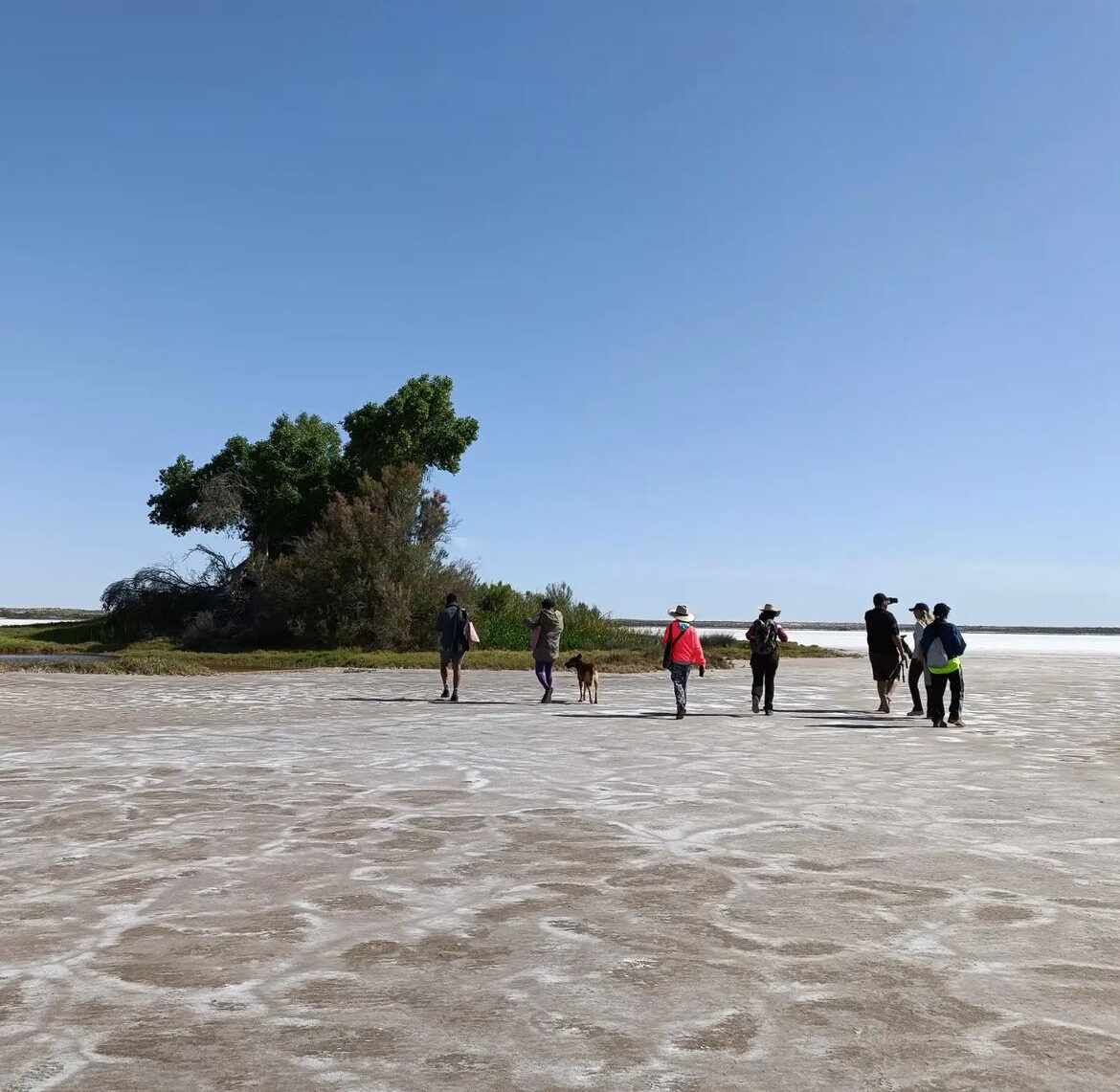
Cover: Kasa Loka. Veronica Borsani. 2018
The Brazilian poet Paulo Leminski once wrote: “Memory is very recent; until yesterday, who remembered?” The phrase refers not only to the fragility of remembrance, but to the conditions that make it possible. Remembering is not a spontaneous or individual act: it takes place within frameworks that authorize, classify, and hierarchize what deserves to be preserved. Behind every act of evocation there is an instance of selection —a tacit law— that decides what enters the domain of the memorable and under which form. Thus, memory does not precede power: it is constituted with it.
From this threshold, forgetting ceases to be accident, chance, or destiny, and reveals itself as its counterpart. Not everything can be kept; not everything should remain. Every gesture of preservation implies a renunciation. Contemporary technologies of amnesia do not operate only through direct suppression, but through excess, saturation, and displacement: they erase faces and names by multiplying them, manipulate archives by promising total availability, condition modes of perception by fixing rhythms, formats, and expectations of reading. The past does not disappear; it is administered.
Faced with this economy of memory, other forms of persistence remain, ones that do not conform to the transparency of the archive or the linearity of history. Memories that are not produced from the center, nor do they aspire to stabilize themselves as a single narrative. They are transmitted through subterranean currents: in the orality of encounter, in the song that repeats itself with variations, in gossip that circulates without a signature, in gestures learned through imitation. They do not advance in a straight line; they deviate, leak, and reappear. Where the archive seeks closure, they leave things open; where history silences, they introduce noise. Rather than resolving the paradoxes of memory, they inhabit them. Their force lies not in exactitude, but in the capacity to reemerge in new forms, even when they seem to be erased.
Here it is useful to take up Édouard Glissant’s notion of chaos, to recall that complexity does not need to be domesticated in order to exist; that within multiplicity, contradiction, and interference there are modes of relation and imagination that do not submit to a single order. The right to opacity is the refusal to have the past reduced to an imposed framework of legibility. In this sense, what remains outside the dominant narrative does not disappear, it shifts toward less visible zones, less legible to power, becoming opaque and fragmentary.
Between what must not be forgotten and what refuses to be captured, the invention of fictions, the construction of language, and the systems that organize the value of information emerge. There, where narration and time do not fully coincide, uneven relations between memory and history take shape, affecting both the modes of production and dissemination of the past and our capacity to conceive futures.
We come to understand, then, that fiction does not oppose truth, but is one of its strategies for survival. Songs, myths, choreographies, and stories invent genealogies that do not aim to replace the archive, but to hold what has slipped from it.
This winter, we bring together texts, images, and voices that, instead of exposing everything to the light, cultivate zones of shadow, echoes, and reverberations. Against the technologies of amnesia, we propose unsubmissive memories: memories that do not claim documentary exactitude, but persistence; that do not seek to monumentalize the past, but to let it remain fugitive and alive.
______
Cover: Kasa Loka. Veronica Borsani. 2018


Subscribe to our newsletter!
¡Gracias por suscribirte!











CALLE DEL ARTÍCULO 123 #116 INT. 100,
COLONIA CENTRO, CUAUHTÉMOC,
CDMX 06040, MÉXICO