Eterno Vulnerável [Eternal Vulnerable] (the first solo exhibition by artist Castiel Vitorino Brasileiro) proposes thinking about freedom not as a closed concept, but as a fragile experience that requires care. Presented at Solar dos Abacaxis (Rio de Janeiro), the exhibition brought together more than 40 new, previously unseen works that weave together memory, body, and spirituality through a deeply collective practice. Through ceramics, paintings, ritual gestures, and symbolic architectures, the artist constructs spaces in which remembering becomes an act of resistance and memory a form of prosperity. We invited curator and editor Rodrigo Lopes to write about this exhibition and to reflect on how, between earth, time, and saudade, art can sustain what insists on remaining.
The end of a story doesn't occur just because we forget it,
because memory is dust that exists because there was once a sea.
Castiel Vitorino Brasileiro
All religions create objects for the protection of something. These are guardians of mystery. In Catholicism, we have the tabernacle, where the consecrated hosts are kept. In evangelical churches, there are jars where the anointing oil is kept. In Candombles and Umbandas, we find cuartinhas, small jars used to store water for spiritual purposes. One of the common characteristics of the African and Afro-Brazilian tradition is the association of the value of art with its function. Contrary to Western perception, beauty and utility are not separate. When we are watching a samba school, if the costumes don't amaze us, it's all for nothing. Art exists to enchant us.
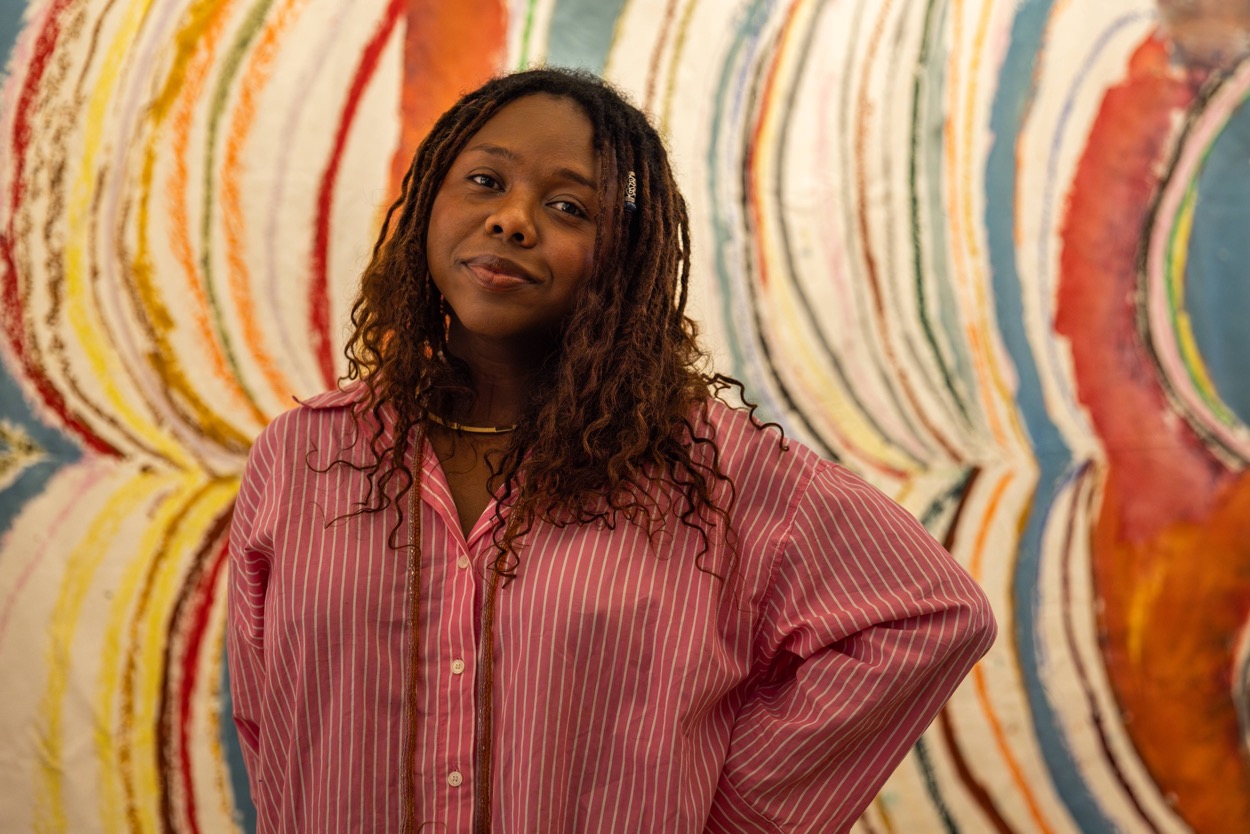
Based at Solar dos Abacaxis, in Rio de Janeiro, the exhibition Eterno Vulnerável brought together 40 previously unseen works produced by the artist Castiel Vitorino Brasileiro. Curated by Bernardo Mosqueira and Matheus Morani, the exhibition discussed a fundamental issue for our times: the notion of freedom. This was her first large-scale institutional solo exhibition in Brazil, celebrating 10 years of her career. Born and raised in Vitoria, Castiel also works as a writer and clinical psychologist, aspects that intertwine in her artistic practice.
The title of the exhibition is based on freedom as an experience. It is not about determining a definitive meaning for the idea of freedom, imprisoning it, but about creating an ephemeral structure to protect it, ensuring its multiple conditions of existence and permanence. This combination of the temporal dimension of freedom and care is something that is repeated within her "perishable spaces of freedom," installations inspired by Afro-Brazilian houses of worship that invite us to rethink our relationship with life.
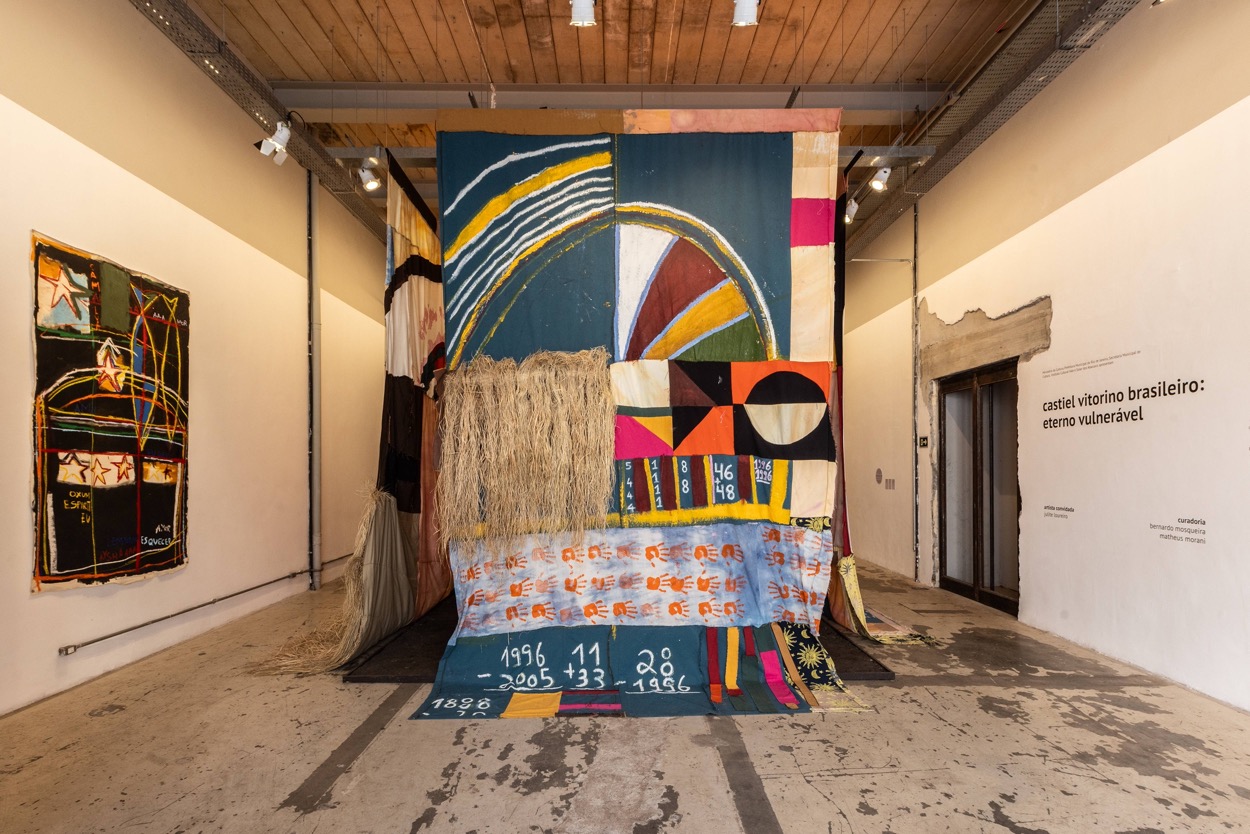
Within her artistic practice, memory is prosperity. It lies in remembering that there is a history that precedes us and that continues to occur regardless of all the inevitable violence. Even so, the prosperity of memory would not reside solely in the act of remembering, but also in the efforts we make to honor and venerate those memories. At the entrance to the exhibition, we were greeted by Ingrid (2025), four vibrant large-scale paintings with non-figurative motifs. These banners, which bore the name of the artist's mother, are decorated with poems, prayers, numbers, dates, straws and painted hands that create a temple-like atmosphere.
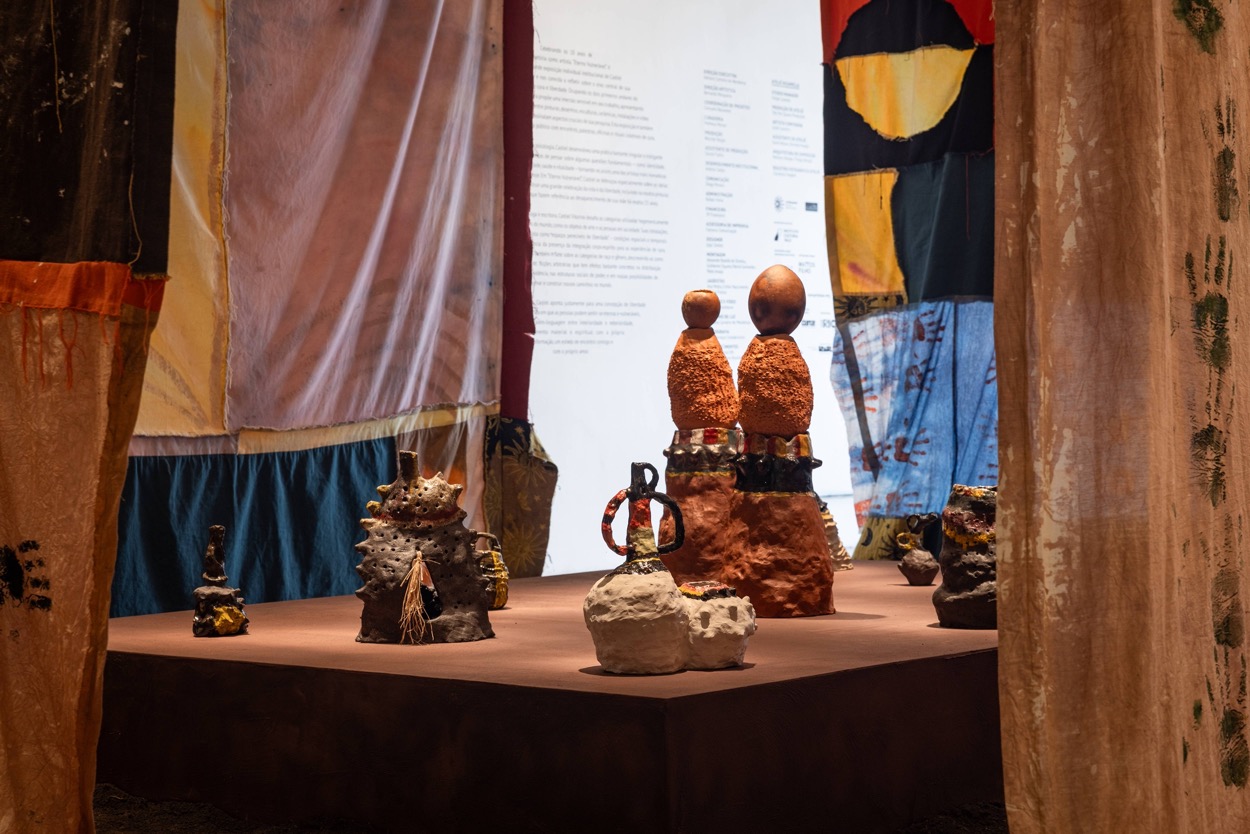
Through them, we glimpse a set of ceramics glazed inside. Similar to the nests of birds and butterflies, these are the Casulos (2024-): ceramics inspired by the Bakongo cosmogram that represents existence as a cycle based on a spiral-shaped idea of time. Small altars made to hold the dreams of angels and where we lose our tears. Surrounded by earth, this immersive installation invited people to enter the space and get dirty. The return to the earth, a sign of fertility, is manifested in the presence of this material in her recent works, such as Montando a história da vida [Assembling the History of Life], exhibited at the 35th São Paulo Biennial, a large piece of earth inside the museum.
Collective practice is something present in the artist's trajectory, from the study groups in Body Psychology, during her undergraduate studies, through the Metodo Elementar [Elementary Method], a clinical proposal developed throughout her master's degree studies in Clinical Psychology, until reaching Digamella, the art school founded by her in 2024. Body exercises, group paintings and drawings are the starting point for the paintings in the Metodo Elementar series, which manifests the collective nature of her art, being both a spiritual and clinical process.
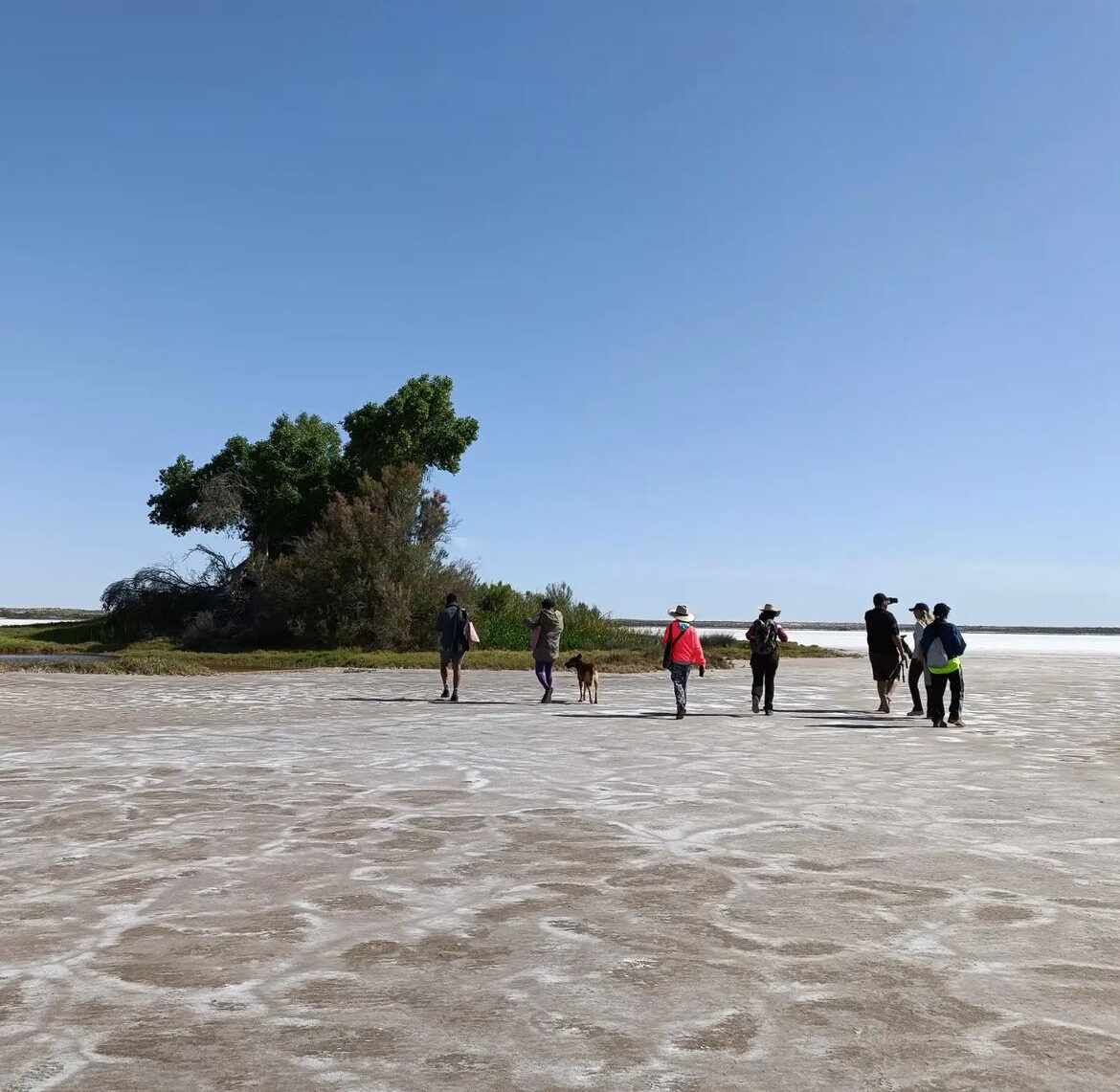
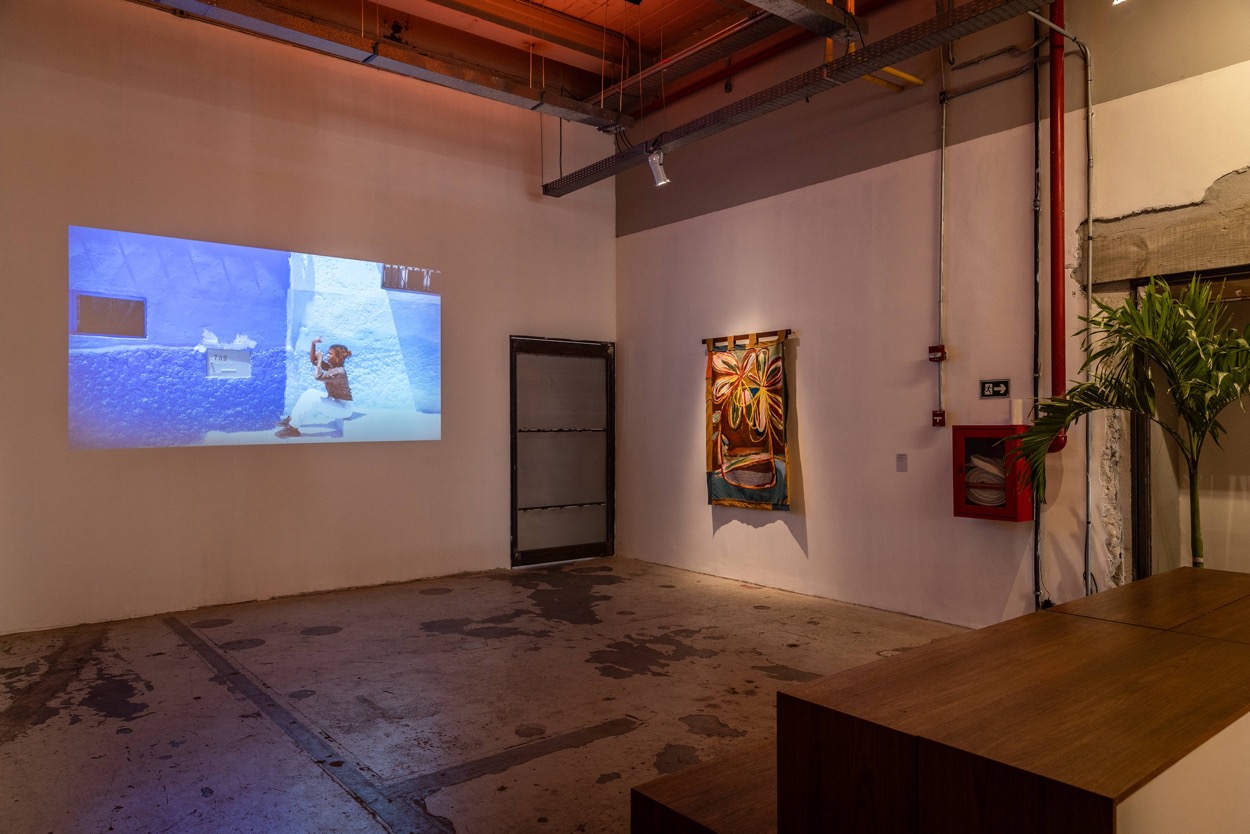
This bodily dimension of memory can also be seen in the video Abre Alas (2025) [Wing Opener], in which we accompany the artist on a journey through the landscapes of Morocco. In Brazilian carnival culture, the "abre-alas" is the float that leads the carnival parade, paving the way for what is to come. In it, we can see the artist choreographing a set of hand gestures. A silent dance in the desert, a deep state of meditation and concentration. It moves as if it were drawing, sketching lines and dots in the air, blurring the boundary between performance and ritual. This repertoire of movements is present in the healing practices performed by the bedezeiras, important figures in the artist's personal history: women whose touch shaped her childhood and her relationship with art.
Walking through the exhibition space, we find the set of drawings Minhas Inspiraçoes [My Inspirations] (2025) and the paintings from the series Lembranças de Infância [Childhood Memories] (2018), works by her grandmother Julite Loureiro Brasileiro. Vases of flowers in different colors and shapes are scattered across the walls of the exhibition, alluding to a classic genre of European academic painting: still life. However, Julite's garden is not limited to referencing the history of Western art. During her childhood, the artist grew up watching her grandmother make paintings to give to her family and loved ones. The presence of Julite and other women in her exhibition suspends the idea of “individuality”. The participation of artists' relatives in their productions directly rejects the myth of genius, a phenomenon that transforms artists into "icons", "products" or "tokens" within art institutions.
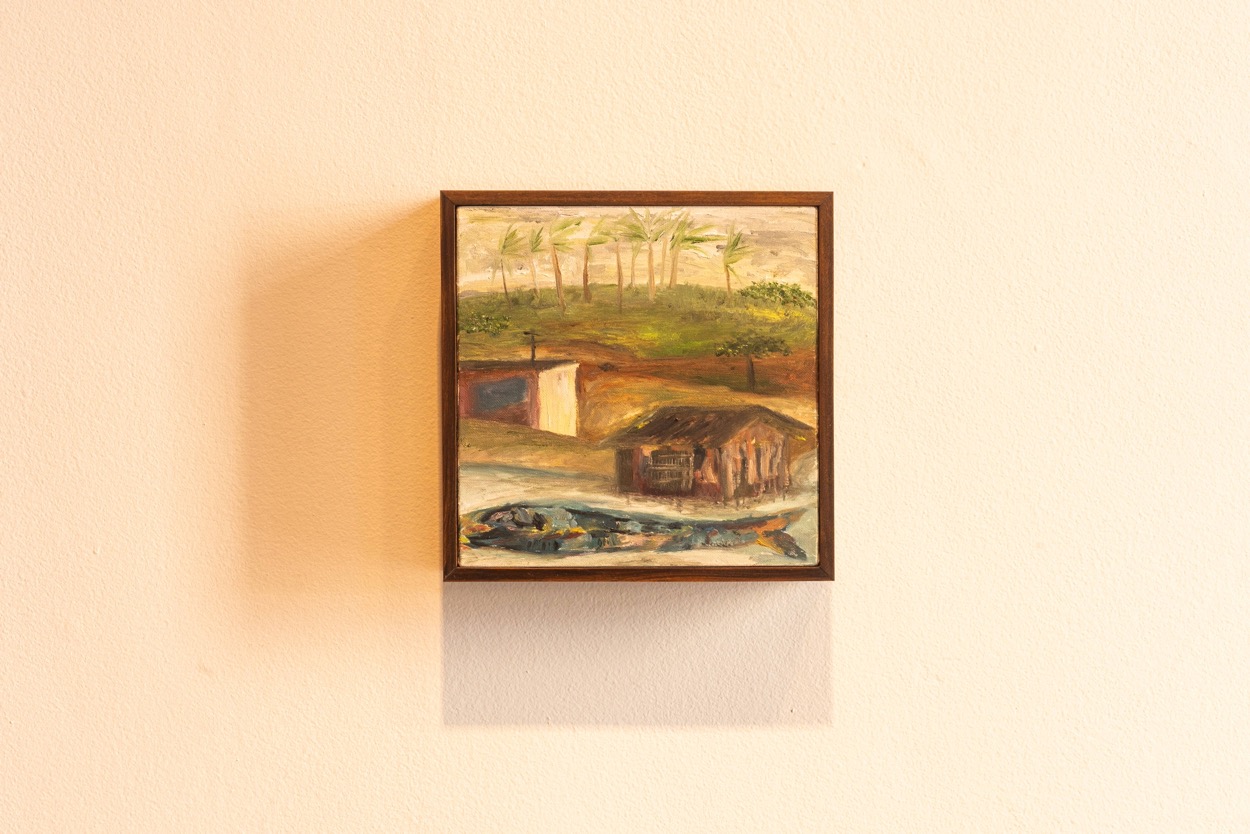
During her residency at the Cite Internationale des Arts in Paris in 2024, Castiel dedicated herself to studying classical and academic painting, a repertoire that the artist gracefully articulates alongside her family-based artistic references. We see images of her homeland in both the large-scale paintings Plantas, sol e agua [Plants, Sun and Water] (2024-) and in Quintais (2024). A set of small-format paintings depict everyday scenes, featuring houses, plants, and fish in warm, earthy tones. These landscapes of rest and abundance refer to Morro da Fonte Grande, located in the central massif of the Island, which since the 17th century was already inhabited by indigenous peoples and by enslaved black people who had escaped. Waking up, praying, cooking, eating, sleeping: gestures that nourish the body and soul.
Não dá pra não pensar em você [I can't stop thinking about you] (2025) is a series of fifteen wooden sculptures adorned with fragments of colorful ceramics and mirrors. Made with dormers, a robust wood used in large constructions, each piece weighs around 100 kilos. Stacked one on top of the other, they rest on a strong structure inspired by mastabas, rectangular tombs from Ancient Egypt built with mud or stone. Together, they form an architecture built around saudade and memorialize the artist's mother, who disappeared 15 years ago. These works confront one with the weight of time.
As a technique that came into the artist's life at the age of ten, mosaics are metaphors for the fragmented dimension of memory, present in sculptures or in compositions within her paintings. Approaching this ancient technique, her work reconstructs images that exist in the world but were destroyed by trauma, abandonment, and separation. By fitting and rearranging these fragments of time, her art reminds us that we too can do this with the many pieces of our history. This is not the end for us.
The end of a story doesn't occur just because we forget it,
because memory is dust that exists because there was once a sea.
Castiel Vitorino Brasileiro
All religions create objects for the protection of something. These are guardians of mystery. In Catholicism, we have the tabernacle, where the consecrated hosts are kept. In evangelical churches, there are jars where the anointing oil is kept. In Candombles and Umbandas, we find cuartinhas, small jars used to store water for spiritual purposes. One of the common characteristics of the African and Afro-Brazilian tradition is the association of the value of art with its function. Contrary to Western perception, beauty and utility are not separate. When we are watching a samba school, if the costumes don't amaze us, it's all for nothing. Art exists to enchant us.
Based at Solar dos Abacaxis, in Rio de Janeiro, the exhibition Eterno Vulnerável brought together 40 previously unseen works produced by the artist Castiel Vitorino Brasileiro. Curated by Bernardo Mosqueira and Matheus Morani, the exhibition discussed a fundamental issue for our times: the notion of freedom. This was her first large-scale institutional solo exhibition in Brazil, celebrating 10 years of her career. Born and raised in Vitoria, Castiel also works as a writer and clinical psychologist, aspects that intertwine in her artistic practice.
The title of the exhibition is based on freedom as an experience. It is not about determining a definitive meaning for the idea of freedom, imprisoning it, but about creating an ephemeral structure to protect it, ensuring its multiple conditions of existence and permanence. This combination of the temporal dimension of freedom and care is something that is repeated within her "perishable spaces of freedom," installations inspired by Afro-Brazilian houses of worship that invite us to rethink our relationship with life.
Within her artistic practice, memory is prosperity. It lies in remembering that there is a history that precedes us and that continues to occur regardless of all the inevitable violence. Even so, the prosperity of memory would not reside solely in the act of remembering, but also in the efforts we make to honor and venerate those memories. At the entrance to the exhibition, we were greeted by Ingrid (2025), four vibrant large-scale paintings with non-figurative motifs. These banners, which bore the name of the artist's mother, are decorated with poems, prayers, numbers, dates, straws and painted hands that create a temple-like atmosphere.
Through them, we glimpse a set of ceramics glazed inside. Similar to the nests of birds and butterflies, these are the Casulos (2024-): ceramics inspired by the Bakongo cosmogram that represents existence as a cycle based on a spiral-shaped idea of time. Small altars made to hold the dreams of angels and where we lose our tears. Surrounded by earth, this immersive installation invited people to enter the space and get dirty. The return to the earth, a sign of fertility, is manifested in the presence of this material in her recent works, such as Montando a história da vida [Assembling the History of Life], exhibited at the 35th São Paulo Biennial, a large piece of earth inside the museum.
Collective practice is something present in the artist's trajectory, from the study groups in Body Psychology, during her undergraduate studies, through the Metodo Elementar [Elementary Method], a clinical proposal developed throughout her master's degree studies in Clinical Psychology, until reaching Digamella, the art school founded by her in 2024. Body exercises, group paintings and drawings are the starting point for the paintings in the Metodo Elementar series, which manifests the collective nature of her art, being both a spiritual and clinical process.
This bodily dimension of memory can also be seen in the video Abre Alas (2025) [Wing Opener], in which we accompany the artist on a journey through the landscapes of Morocco. In Brazilian carnival culture, the "abre-alas" is the float that leads the carnival parade, paving the way for what is to come. In it, we can see the artist choreographing a set of hand gestures. A silent dance in the desert, a deep state of meditation and concentration. It moves as if it were drawing, sketching lines and dots in the air, blurring the boundary between performance and ritual. This repertoire of movements is present in the healing practices performed by the bedezeiras, important figures in the artist's personal history: women whose touch shaped her childhood and her relationship with art.
Walking through the exhibition space, we find the set of drawings Minhas Inspiraçoes [My Inspirations] (2025) and the paintings from the series Lembranças de Infância [Childhood Memories] (2018), works by her grandmother Julite Loureiro Brasileiro. Vases of flowers in different colors and shapes are scattered across the walls of the exhibition, alluding to a classic genre of European academic painting: still life. However, Julite's garden is not limited to referencing the history of Western art. During her childhood, the artist grew up watching her grandmother make paintings to give to her family and loved ones. The presence of Julite and other women in her exhibition suspends the idea of “individuality”. The participation of artists' relatives in their productions directly rejects the myth of genius, a phenomenon that transforms artists into "icons", "products" or "tokens" within art institutions.
During her residency at the Cite Internationale des Arts in Paris in 2024, Castiel dedicated herself to studying classical and academic painting, a repertoire that the artist gracefully articulates alongside her family-based artistic references. We see images of her homeland in both the large-scale paintings Plantas, sol e agua [Plants, Sun and Water] (2024-) and in Quintais (2024). A set of small-format paintings depict everyday scenes, featuring houses, plants, and fish in warm, earthy tones. These landscapes of rest and abundance refer to Morro da Fonte Grande, located in the central massif of the Island, which since the 17th century was already inhabited by indigenous peoples and by enslaved black people who had escaped. Waking up, praying, cooking, eating, sleeping: gestures that nourish the body and soul.
Não dá pra não pensar em você [I can't stop thinking about you] (2025) is a series of fifteen wooden sculptures adorned with fragments of colorful ceramics and mirrors. Made with dormers, a robust wood used in large constructions, each piece weighs around 100 kilos. Stacked one on top of the other, they rest on a strong structure inspired by mastabas, rectangular tombs from Ancient Egypt built with mud or stone. Together, they form an architecture built around saudade and memorialize the artist's mother, who disappeared 15 years ago. These works confront one with the weight of time.
As a technique that came into the artist's life at the age of ten, mosaics are metaphors for the fragmented dimension of memory, present in sculptures or in compositions within her paintings. Approaching this ancient technique, her work reconstructs images that exist in the world but were destroyed by trauma, abandonment, and separation. By fitting and rearranging these fragments of time, her art reminds us that we too can do this with the many pieces of our history. This is not the end for us.


Subscribe to our newsletter!
¡Gracias por suscribirte!








CALLE DEL ARTÍCULO 123 #116 INT. 100,
COLONIA CENTRO, CUAUHTÉMOC,
CDMX 06040, MÉXICO